
The Window Measuring Checklist: How to Avoid Costly Reorders
September 20, 2026 · 3 min read
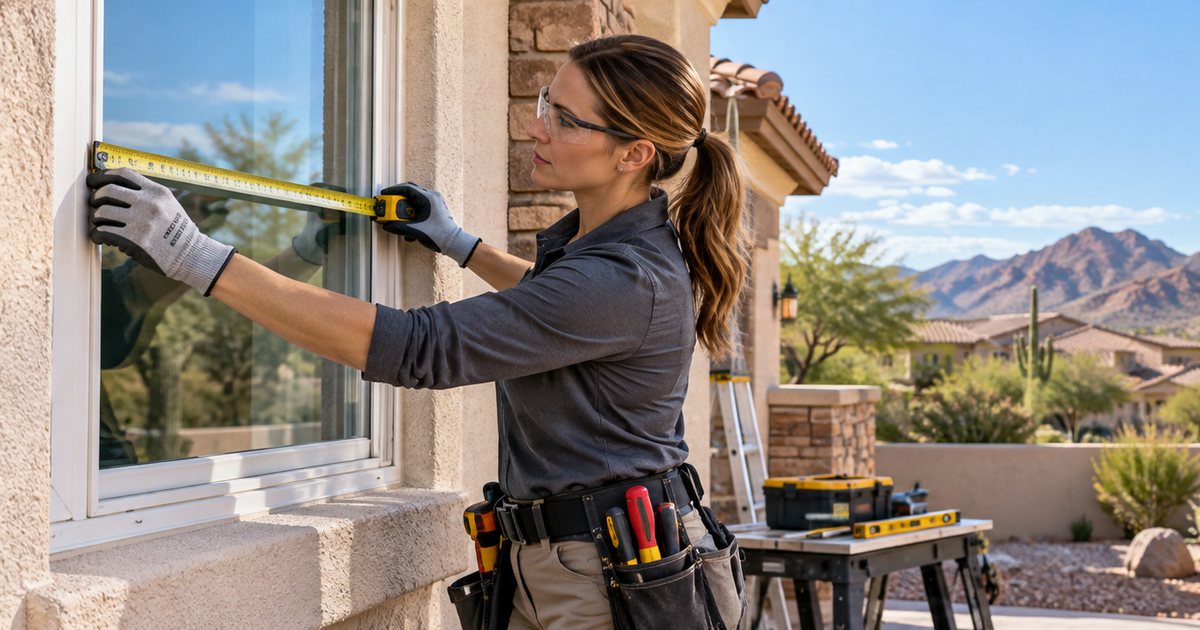
A window that doesn't fit is one of the most expensive mistakes in this business. The window is ordered, the customer has waited weeks, and then it arrives an eighth of an inch off. Now there's a reorder, a second wait, and a customer who has stopped trusting the schedule.
Almost all of these problems start at the measuring visit. Here's a checklist that makes them much less likely.
Before the visit
- Confirm the appointment with the customer, and make sure someone will be home to give access to every room.
- Bring what you need: a reliable tape measure, a level, a notepad or your phone, and a way to label each opening.
- Know what the job is. Is this a replacement, a new opening, or a repair? The answer changes what you measure and how.
At each opening
1. Measure the width in three places. Measure across the top, the middle, and the bottom of the opening. Openings are rarely perfectly square, and the three numbers often differ.
2. Measure the height in three places. Measure the left side, the center, and the right side.
3. Follow your manufacturer's rule for which number to use. Many use the smallest of the three measurements, then deduct a set amount. Whatever your rule is, apply it the same way every time and write down all the numbers you took, not just the one you chose.
4. Check whether the opening is square. Measure the two diagonals. If they don't match, the opening is out of square, and you'll want to note it before the window is ordered.
5. Look for anything in the way. Trim, sills, stucco, blinds, handles, and anything outside that could interfere with the new window.
6. Note every option on the order. Window style, which way it opens (and which side of the window your supplier uses to define left and right), grid pattern, glass type, color, and screens. Check local requirements for bedroom egress and safety glass, and record them when they apply.
7. Take a photo of the opening and label it with the room and wall, so there's no doubt later about which window is which.
Write it down once, in one place
Give every opening a consistent label, such as "Kitchen, north wall, left window," and record everything about it in one place. Don't split measurements between a notepad, a text message, and someone's memory. When the order goes in, whoever places it should be reading from a single, complete record.
Measure twice, or have someone else check
A second look catches what tired eyes miss. Have another person confirm the measurements, or go back over your own numbers before you leave. Ask yourself one question at each opening: "Would I bet the cost of this window on these numbers?"
After the visit
Place the order promptly, and record the order date and expected arrival. Tell the customer what happens next and roughly how long it takes. Once the order is in, the job becomes one of those repairs or installs waiting on special-order parts, so give it a check-in date rather than letting it sit.
Where ScheduleMe fits
ScheduleMe treats a measuring visit as its own job type, and records the window count, door count, and color on the job. When a technician starts any job, the app asks for at least one photo of the site and requires them to confirm the question "Did you verify each measurement for every opening?" That confirmation is saved in the job's history along with who made it and when.
It doesn't replace measuring carefully. What it gives you is a record: photos of the site and a note that someone checked, so if a question comes up later, you can look it up instead of guessing.